International companies often discover that cracking the American market is far from simple. With over 330 million consumers and the world's largest GDP, the United States presents massive rewards along with daunting complexities. Success here means mastering more than sales strategies since adapting to American cultural expectations and legal requirements becomes essential. This guide breaks down the critical steps, major entry options, and costly mistakes that global firms must understand before taking the leap into the competitive American business scene.
Table of Contents
- Defining US Market Entry For Global Firms
- Core Pathways And Entry Strategies Explained
- Legal And Regulatory Requirements For Expansion
- Key Compliance, Tax, And Risk Challenges
- Common Mistakes Global Companies Should Avoid
Key Takeaways
| Point | Details |
|---|---|
| Understanding Market Dynamics | Global firms must recognize that success in the U.S. requires a tailored approach to meet local consumer needs and cultural expectations. |
| Choosing the Right Entry Strategy | Companies should carefully evaluate their entry methods, ranging from exporting to establishing subsidiaries, based on their industry and resources. |
| Navigating Legal Requirements | Successful market entry demands thorough knowledge of federal, state, and local regulations, including compliance and tax implications. |
| Avoiding Common Pitfalls | Firms must conduct adequate market research and remain adaptable to cultural differences and regulatory challenges to avoid critical mistakes. |
Defining US Market Entry for Global Firms
US market entry represents a strategic process where international companies establish operational presence and commercial activities within the American business ecosystem. Unlike simple export strategies, market entry demands comprehensive planning that encompasses legal, cultural, and economic considerations. Global firms must recognize that entering the United States is not just about selling products, but creating a tailored approach that resonates with American consumers and business structures.
When examining international expansion strategies, companies typically explore multiple approaches to internalizing market operations. The core objective involves strategically internalizing market opportunities while minimizing transaction costs and maximizing competitive advantages. This process requires firms to deeply understand the unique dynamics of the American marketplace, which differs significantly from other global economic environments.
The strategic framework for US market entry typically involves multiple potential pathways:
- Direct export strategies
- Establishing local subsidiary corporations
- Joint venture partnerships
- Licensing agreements
- Franchising models
Companies must carefully assess their specific industry, target market segment, and organizational capabilities when selecting an appropriate market entry mechanism. International business strategies can be categorized into ethnocentric, polycentric, and geocentric orientations, each offering distinct approaches to navigating cross-border commercial challenges.
Successful US market entry demands more than technical business planning. It requires cultural intelligence, regulatory compliance expertise, and a nuanced understanding of American consumer behaviors and business expectations. Global firms must be prepared to invest significant resources in market research, legal structuring, and adaptive strategies that position them for sustainable growth within the complex and competitive US business landscape.
Core Pathways and Entry Strategies Explained
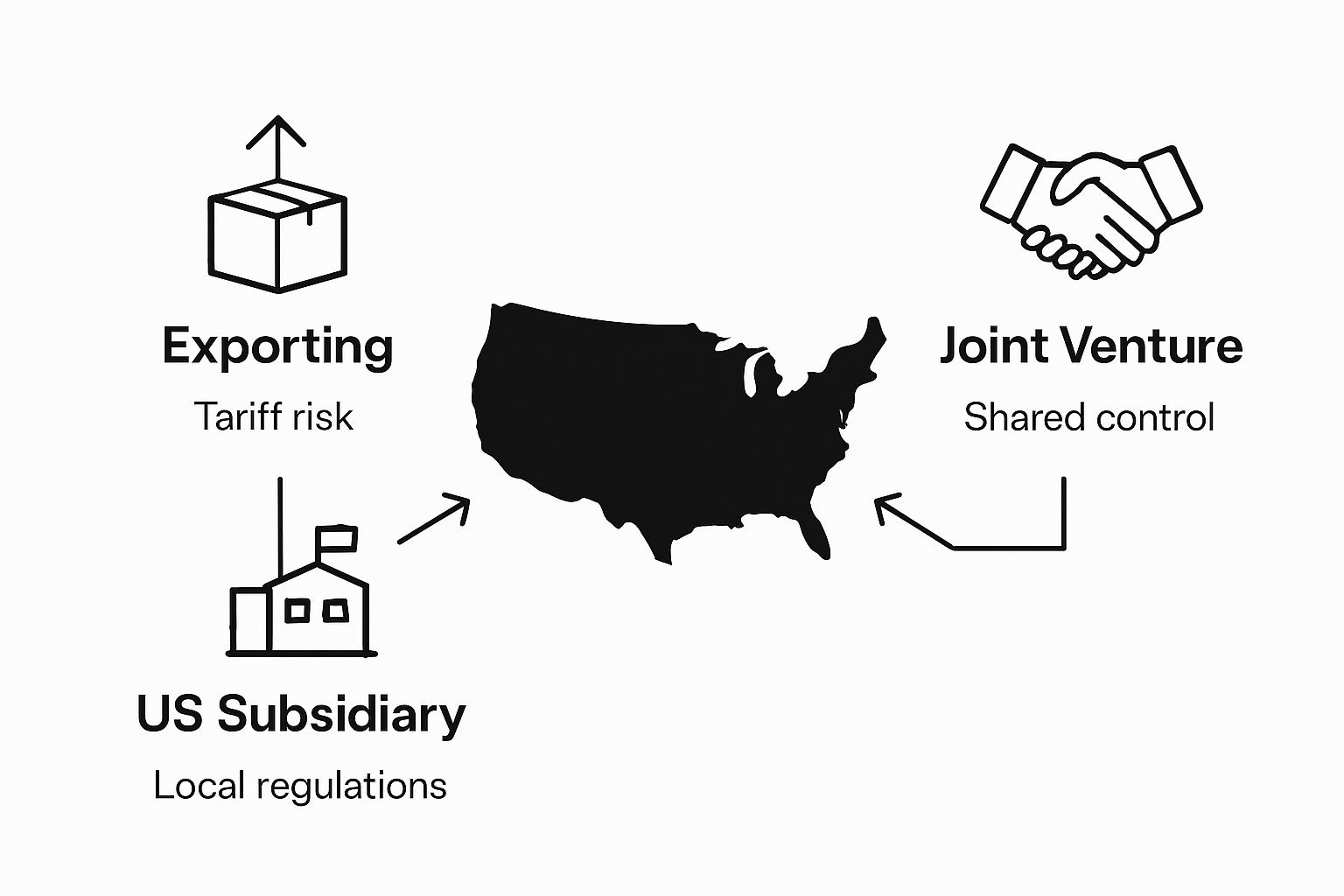
For international firms seeking to penetrate the American market, selecting the right entry strategy is crucial for long-term success. Comprehensive market entry approaches range from low-investment methods like exporting to more complex strategies involving direct operational establishment within the United States.
The primary market entry strategies can be categorized into five fundamental approaches:
- Exporting: Direct product shipment to US markets with minimal local infrastructure
- Licensing: Permitting US firms to use intellectual property or manufacturing processes
- Joint Ventures: Partnering with established American companies to share risks and resources
- Subsidiary Establishment: Creating a fully owned American corporate entity
- Strategic Alliances: Forming collaborative relationships without full legal integration
Foreign market entry strategies involve nuanced decision-making that considers organizational capabilities, financial resources, and risk tolerance. Each approach presents unique advantages and challenges, requiring careful assessment of the firm's specific industry dynamics, target market segment, and strategic objectives.

The selection process demands comprehensive due diligence. Companies must evaluate factors including regulatory compliance, tax implications, operational complexity, market responsiveness, and potential scalability. Successful US market entry is not a one-size-fits-all proposition but a tailored strategy reflecting the organization's distinctive strengths and growth ambitions.
Legal and Regulatory Requirements for Expansion
Expanding into the United States requires navigating a complex landscape of legal and regulatory requirements that can significantly impact a company's success. Comprehensive market entry strategies demand meticulous attention to multiple layers of compliance across federal, state, and local jurisdictions.
Key legal considerations for international firms include:
- Business Entity Registration: Selecting appropriate corporate structures
- Tax Identification: Obtaining federal and state tax numbers
- Employment Regulations: Understanding labor laws and worker classification
- Intellectual Property Protection: Securing patents, trademarks, and copyrights
- Industry-Specific Licensing: Meeting sector-specific regulatory requirements
Companies must develop a multifaceted approach to legal compliance that encompasses several critical domains. This includes tax considerations that impact financial planning, understanding complex employment regulations, and ensuring proper corporate governance across different jurisdictional requirements.
The regulatory landscape presents significant challenges, requiring firms to invest substantial resources in legal expertise and compliance infrastructure. International businesses must be prepared to work with specialized legal counsel, develop robust compliance frameworks, and maintain ongoing adaptability to evolving regulatory environments. Successful market entry demands not just technical compliance, but a strategic approach that anticipates potential regulatory challenges and proactively addresses them throughout the expansion process.
Key Compliance, Tax, and Risk Challenges
Compliance challenges for European companies entering the U.S. market represent a complex landscape of interconnected legal, financial, and operational risks that demand strategic navigation. International firms must develop comprehensive risk management approaches that address multiple dimensions of potential regulatory exposure.
The primary compliance and risk challenges can be categorized into several critical domains:
- Regulatory Complexity: Navigating federal, state, and local regulatory frameworks
- Tax Implications: Managing international tax structures and reporting requirements
- Financial Reporting: Adhering to American accounting standards and disclosure protocols
- Employment Regulations: Ensuring compliance with labor laws and worker classification rules
- Intellectual Property Protection: Securing and defending legal rights across jurisdictions
Risk mitigation requires a proactive and multifaceted approach. Companies must invest in specialized legal counsel, develop robust internal compliance mechanisms, and maintain continuous monitoring of regulatory changes. Tax considerations play a particularly critical role, with potential implications for overall financial performance and operational sustainability.
Successful market entry demands more than technical compliance. Organizations must cultivate a culture of regulatory awareness, implement adaptive governance frameworks, and develop the organizational agility to respond quickly to evolving legal landscapes. This requires substantial investment in expertise, technology, and strategic planning to effectively manage the complex ecosystem of American business regulations.
Common Mistakes Global Companies Should Avoid
European companies facing U.S. market entry challenges frequently encounter critical strategic errors that can derail their expansion efforts. Understanding and anticipating these potential pitfalls is crucial for developing a successful market penetration strategy.
The most significant mistakes international firms typically make include:
- Inadequate Market Research: Failing to deeply understand local consumer behaviors
- Cultural Misalignment: Overlooking critical cultural nuances in business communication
- Regulatory Underpreparation: Insufficient comprehension of complex legal requirements
- Financial Miscalculation: Underestimating startup costs and operational expenses
- Strategic Inflexibility: Rigidly applying home country business models
Cultural adaptation strategies represent a critical component of successful market entry. Companies must recognize that what works in their home market may not translate directly to the American business environment. This requires a fundamental reimagining of operational approaches, communication styles, and strategic frameworks.
Navigating the American market demands more than technical competence. Organizations must develop organizational agility, cultivate local market insights, and demonstrate a willingness to learn and adapt. Successful international firms approach U.S. expansion with humility, recognizing that sustainable growth requires continuous learning, strategic flexibility, and a genuine commitment to understanding the nuanced dynamics of the American business ecosystem.